
Entitled customers are toxic!
- Food Business Coach Tracie
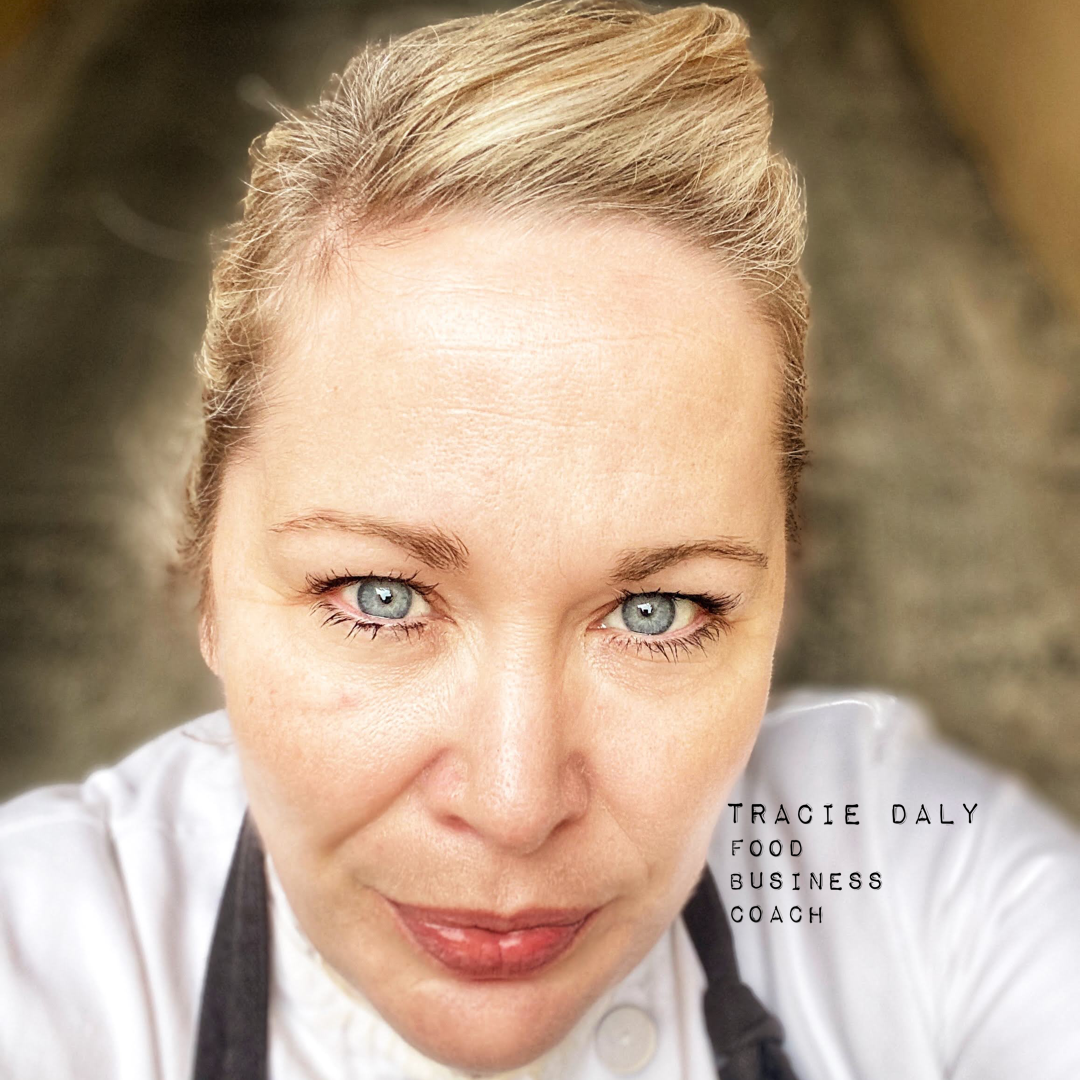
- Feb 4
- 9 min read
Entitled consumer behaviour is quietly stripping the profit, joy, and humanity out of my world – the world of independent Irish hospitality that I have given my life to.

What I’m seeing every day
For years I’ve worked in, run, and now coach cafés, restaurants and food businesses across Ireland, and I can tell you this: the behaviour of a growing group of customers is no longer “a bit cheeky”, it’s destructive. On my TikTok and Instagram, I’ve been documenting what’s really happening at ground level – from people treating small food businesses like public parks and co‑working hubs, to those who weaponise “the customer is always right” to justify anything they feel like doing.
BYO food into a café: not harmless, not acceptable
One of the behaviours I will not tolerate or condone is people walking into a café with food bought somewhere else and expecting to eat it at the tables because they’ve “at least bought a coffee”. From my side of the counter, that “innocent” purchase of food from another establishment or that you made at home in your own house, the roll, those biscuits, that birthday cake, a croissant or pastry you bought in another establishment is not harmless – it wipes out the gross profit that seat was supposed to generate to help pay wages, VAT, rent, energy, insurance, and a basic wage for the team and the owner who has taken all the risk.
When you sit in an independent Irish café and eat food from another business, you are asking that café to provide heat, light, toilets, staff, music, Wi‑Fi, cleaning, insurance and food‑safety cover for FREE. You are also exposing that business to food‑safety risk and reputational damage if something goes wrong, because once that food is on their table, the customer will blame the café, not the shop you bought it from.
Table camping: those seats are not free office space
We are also seeing more and more customers turning up with laptops, chargers, notebooks and the attitude that a single low‑margin drink buys them the right to a table for hours. I love that cafés feel safe and welcoming enough for people to relax, write, and work – but I cannot pretend that a €4 drink over two hours in an independently owned café is sustainable.
Here’s the reality I work with every day when coaching food businesses: a “good” independent café in Ireland might turn over a few hundred thousand euro a year and, after every bill is paid, the owner’s actual income can look more like a modest wage for a frankly BRUTAL workload. Every table that is blocked by low‑ or no‑spend guests quietly destroys the numbers that keep that business open, and I see those effects in the books long before you see the “closed permanently” sign on the door.

Weaponised hospitality: when “I’m the customer” becomes abuse.
There is a huge difference between genuine feedback and outright entitlement, and I see that line crossed every week. I see customers aggressively arguing over clear, reasonable policies – no outside food, minimum orders per table, time‑limited sittings, basic safety rules – as if boundaries are a personal insult rather than a condition of survival.
“The customer is always right” has been twisted into a stick to beat small business owners and staff with. When every “no” is treated as rude and every policy is treated as negotiable, staff shut down, owners burn out, and the people who genuinely care about hospitality are driven out of the industry.
The emotional toll on people like me
Behind every independent café or food business I work with is a human being who is already operating at the limits of their mental, physical and financial capacity. They are up at dawn, working long service hours, then going home to do payroll, ordering, compliance and marketing while their friends wind down for the night.
On top of that, they are now dealing with being filmed without consent, half‑truths posted online, and public pile‑ons over issues that could have been resolved in 30 seconds of respectful conversation. I coach owners who are exhausted not by the work itself, but by the disrespect – by the constant feeling that, no matter what they give, it will never be enough for some people.
What it actually costs us to open the doors
Most customers will never see the numbers I work through with food business owners every week – but you need to understand them if you want to know why certain behaviours are unacceptable. Before a single coffee is poured, an independent Irish café has already paid out thousands in deposits, legal fees, fit‑out, equipment, licences, training, stock, signage, tech, and marketing.
Then there is the daily “cost of turning the key”:
Rising wages and the move towards a living wage
Employer pension contributions under auto‑enrolment
High commercial rents and rates
Eye‑watering energy and utility bills for ovens, fridges, coffee machines and ventilation
Insurance, food‑safety compliance, ongoing training and inspections
VAT at 13.5% on food service, with the business acting as tax collector and cash‑flow shock absorber
None of this disappears because a customer decides they only want to “just sit”, occupy a four‑top, eat their own food, or spend the bare minimum while using every facility. Those choices land directly on the shoulders of the owner – the same owner you might later complain “suddenly closed” without ever understanding why.
How entitlement feeds the closure crisis I’m fighting
I spend a lot of my time helping owners understand their numbers, tighten their systems and fight to stay open in the face of rising costs and staff shortages. When you layer entitled customer behaviour on top of thin margins and escalating overheads, it is no surprise to me that we are seeing wave after wave of closures in Irish hospitality.
Every outside roll/ sandwich eaten in an independent café, every two‑hour laptop camp for the price of a single drink, every hostile review because an owner enforced a basic boundary – they all contribute to the slow strangling of the very places people claim to “love”. If you value local cafés, restaurants and food trucks – the places that remember your name and your order – then you cannot keep behaving in ways that make it impossible for them to survive.
Why your boundaries are an act of care
When you say “no” to outside food, insist on minimum spends, explain time limits, or refuse to bend food‑safety rules, it is not because you are being harsh or unwelcoming. It is because you understand – from lived experience and from coaching – exactly what it costs to keep those doors open and those jobs alive.
Clear boundaries are not anti‑hospitality; they are the only way to protect staff, protect customers, and protect the viability of independent food businesses in Ireland. If I didn’t care deeply about this industry and the people in it, I would keep my head down, say nothing, and let the closures keep coming – but I care too much to stay quiet.
My challenge to you
So here is my ask, as a food business coach, a former operator, and someone who is fiercely protective of Irish hospitality:
Eat the business’s food at the business’s tables – don’t bring your own.
Order in a way that respects the time and space you’re using, especially at busy times.
Honour clear policies on time limits, food‑safety and minimum spends.
Give feedback with respect and context, not in the heat of a public online rant.
Remember there is a human being – often the owner – behind that counter, not a faceless corporation.
Entitled consumer behaviour and the reality of running an independent food business in Ireland cannot both win. If you want cafés and restaurants with soul, character and real hospitality, then it’s time to look at your own behaviour and decide whether you’re helping those doors stay open – or quietly pushing them shut. Mutual respect breeds the most rewarding transactions and allows our towns and villages to nurture entrepreneurship and keeps chains away. We must do better.

When I talk about entitled customers and “no outside food”, I am not talking about families doing their absolute best to keep a child with complex needs safe, nourished and regulated. Those are two completely different worlds – and I treat them very differently.
The line between entitlement and genuine need
There is a clear line in my mind between “I don’t feel like ordering food here” and “my child physically or neurologically cannot cope without this specific food”. One is preference and convenience; the other is about medical, sensory or developmental needs where the wrong food or environment can mean meltdowns, pain, or serious health risks.
When a parent quietly explains that their child is coeliac, tube‑fed, autistic with a restricted safe‑food list, or has a diagnosed medical condition that limits what they can eat, we are no longer in the territory of café rules – we are in the territory of duty of care and basic humanity. Those families carry a huge daily load already; my job as a food business coach and former operator is to help businesses meet them with compassion, structure and solutions, not with a blanket “computer says no”.
Why I will always accommodate special dietary and additional needs
If a family comes to a café I’m working with and says, “We’d love to eat here, but our child can only manage this one brand of yoghurt / these gluten‑free biscuits / this specific texture,” that is a very different conversation to someone walking in with a supermarket bag because they don’t want to spend money. In those situations, I encourage owners to listen first, ask a couple of clarifying questions, and then agree a plan that keeps everyone safe and respected – even if that means making an exception to the usual outside‑food policy.
Sometimes that looks like allowing a medically necessary snack from home alongside paid drinks or meals for the rest of the family. Sometimes it looks like adapting what’s on the menu – simplifying a dish, swapping components, or using certified gluten‑free options – where that can be done safely and without cross‑contamination.
Safety, dignity and inclusion come first
Children and adults with allergies, coeliac disease, disabilities, autism or feeding disorders are already navigating a minefield of risk and exclusion. The last thing I want is for an independent food business to become another place where a parent feels judged or pushed out because their child’s needs don’t fit neatly into the menu or the house rules.
Good hospitality puts safety and dignity first. If that means taking a moment at the counter to say, “Tell me what your child can safely eat and how we can make this work for you,” then that is time well spent – and it often turns into lifelong loyalty from a family who finally feels seen.
Why this is different to entitled behaviour
Entitled behaviour says, “I’ll do what I like here because I’m the customer, and you should be grateful I came in at all.” Genuine need says, “We’d love to be here, but we have some constraints – can you work with us so everyone stays safe and regulated?”
The first ignores the cost and risk the business carries and often refuses to engage in any kind of adult conversation. The second is rooted in vulnerability and trust: parents are sharing personal, sometimes painful information about their child’s health or neurodivergence, in the hope that you will meet them halfway.
I will fight hard against entitlement because it damages businesses and staff. I will fight just as hard to make sure children with additional needs, and their families, are welcomed, accommodated and protected wherever possible.
How I guide businesses to handle these situations
When I’m coaching food business owners, we build this into their policies and training:
Clear no‑outside‑food rules for general customers, so the business can remain viable.
A named process for exceptions in cases of medical, dietary or additional needs – “Bring it to the owner or manager, listen, then decide together.”
Menu notes and staff scripts that make it easy to talk about allergies and special diets confidently and kindly.
A culture where staff know they will be backed for using common sense and compassion in genuine special‑needs situations.
That way, boundaries stay strong where they need to be strong – with the entitled few – but there is also a clear, safe path for families who genuinely need something different in order to participate.
The heart of it
At the heart of all of this is something very simple: I believe independent Irish hospitality should be both sustainable and humane. We cannot afford to subsidise entitled behaviour, but we also cannot call ourselves hospitable if we refuse to flex for a child who literally cannot eat or cope without specific support.
So when you see me drawing hard lines with certain customer behaviours, know this: those lines are never aimed at the families doing their best with complex needs. Those families are the ones I want in our cafés and restaurants – feeling welcome, understood, and safe – long after the entitled customers have taken their business, and their attitude, elsewhere.

If your business needs a an injection of energy or it is creaking under the weight of rising costs, staff shortages and brutally honest customers, doing nothing is the most expensive decision you can make. Right now, you can have Tracie Daly, Food Business Coach, walk your site in person or sit with you online for fully funded, action‑focused mentoring that tears into the real problems and rebuilds your systems for profit. No more guessing, no more fragile ego – just a straight‑talking expert in your corner, paid for, so you can stop leaking money and start running the business you thought you were building in the first place.
Tracie Daly
Food Business Coach
0851755005


Comments